
IN THIS ARTICLE
- Why Hail Damage Is a Major Inspection Issue for Texas Sellers
- How Inspectors Document Hail Damage on Texas Inspection Reports
- What Hail Damage Findings Mean for the Repair Amendment
- Hail Damage Repair vs. Full Roof Replacement: What Texas Sellers Need to Know
- How Fix Before Closing Handles Hail Damage Inspection Repairs in DFW
- Frequently Asked Questions
Texas is one of the most hail-active states in the country. The DFW Metroplex sits in a zone where large hail events cycle through with regularity, and virtually every home in Tarrant County has experienced at least one significant hail event during its lifespan. For Texas sellers, hail damage is not a hypothetical inspection risk. It is a near-certainty that needs to be understood and managed correctly when the buyer’s inspection report comes back.
Fix Before Closing handles hail damage inspection repair items for DFW real estate agents and home sellers as part of the full repair amendment scope. Here is what Texas sellers need to know about hail damage findings after the inspection report comes back and the repair amendment lands.
Why Hail Damage Is a Major Inspection Issue for Texas Sellers
The DFW area receives hail from storm systems that move through North Texas from the west and southwest throughout the spring and early summer months. These systems produce hail that ranges from pea-sized to baseball-sized in significant events, and the frequency of these events means that roofing systems in the DFW market are under regular stress from impact damage over their service life.
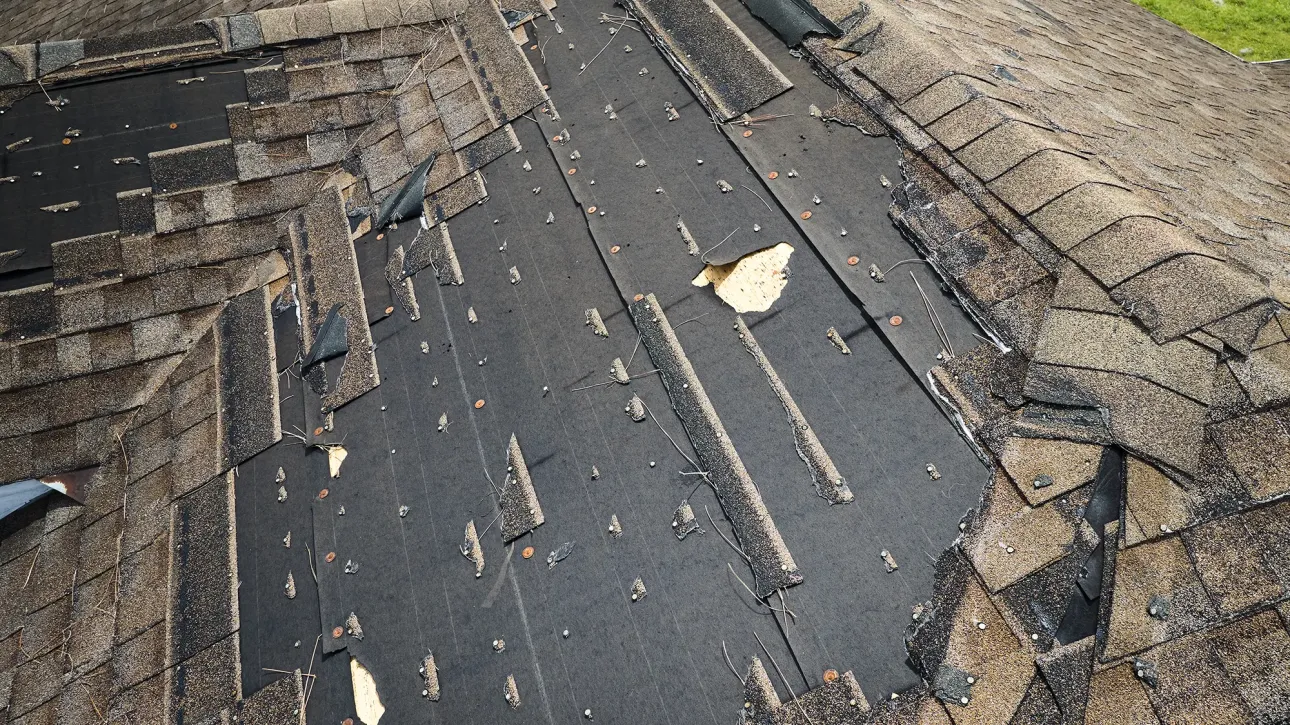
Hail damages roofing systems in ways that are not always visible from the ground or immediately apparent to homeowners. Asphalt shingles absorb hail impact by losing granules, the protective coating that gives shingles their weather resistance and UV protection. A shingle that has lost significant granule coverage is a shingle that is degrading faster than it should and that is more vulnerable to water intrusion during subsequent rain events.
Flashing around chimneys, skylights, pipe penetrations, and roof transitions is particularly vulnerable to hail impact. Metal flashing that absorbs repeated hail strikes develops micro-fractures and separation points that allow water to enter at the roof penetration. These are often not visible without a professional roof inspection but they become highly visible on an inspection report when the inspector documents moisture readings or staining at interior locations directly below the affected flashing.
The insurance dimension makes hail damage particularly significant for Texas real estate transactions. Homeowners insurance carriers in Texas are acutely aware of hail exposure and factor roof condition into their underwriting decisions. A buyer whose insurance carrier declines to write a policy or issues coverage with a roof exclusion has a problem that becomes the seller’s negotiation even after the repair amendment has been agreed upon.
How Inspectors Document Hail Damage on Texas Inspection Reports
Texas home inspectors are trained to assess roof condition and document evidence of hail damage as part of a standard inspection. Understanding what inspectors are looking for and how they document hail findings helps sellers interpret what they are seeing on the report and what the buyer’s amendment is likely to request.
Granule loss documentation. Inspectors look for bare spots on asphalt shingles where granule coverage has been lost to hail impact. They also look for granule accumulation in gutters and at the base of downspouts, which indicates granule shedding has been occurring. Significant granule loss is documented with photos and a notation about the affected areas.
Impact marks and bruising. Hail impact on asphalt shingles leaves circular impact marks where the hail struck and the granules compressed or were dislodged. Inspectors document these marks as evidence of hail activity. A roof with multiple impact marks in a concentrated pattern is a roof that experienced a significant hail event and has not been repaired or replaced since.
Flashing condition. Inspectors document flashing around all roof penetrations and transitions. Metal flashing that shows denting, separation from the substrate, or raised edges is flagged as a hail-related finding. Inspectors also note any caulking or sealant at flashing locations that has failed, cracked, or separated.
Ridge cap and hip shingle condition. The ridge cap and hip shingles are among the most exposed parts of the roof and show hail damage more clearly than field shingles in many cases. Inspectors document cracking, splitting, and granule loss on ridge and hip coverage as part of the hail damage assessment.
Gutters and downspouts. Hail impact on metal gutters leaves denting patterns that inspectors use to confirm that the property experienced a hail event of significance. Multiple dents in a consistent pattern across gutter runs is corroborating evidence of hail activity that the inspector documents alongside the roof surface findings.
What Hail Damage Findings Mean for the Repair Amendment
When hail damage findings appear on the buyer’s repair amendment, the buyer is typically asking for one of three things: repair of specific damaged areas, documentation that previous damage was properly addressed, or a credit toward roof replacement.
The repair request is most appropriate when the hail damage is localized, the roof is otherwise in good condition, and the specific findings can be addressed without replacement of the entire roofing system. Flashing repair, localized shingle replacement in impact-concentrated areas, and ridge cap replacement are repairs that a licensed roofer can address and document properly without requiring a full replacement.
The documentation request comes up when the inspector’s report references granule loss or impact marks but the seller has documentation from a previous insurance claim that the roof was repaired or replaced after a hail event. In this case, the buyer is asking for confirmation that the finding reflects documented historical activity that has been addressed, not an unresolved ongoing condition.
The replacement credit or replacement request comes up when the roof is at or near the end of its service life, when the hail damage is pervasive across the roof surface, or when the buyer’s insurance carrier is declining to write coverage without a replacement. This is the most significant hail damage conversation in a Texas real estate transaction and it is the one that requires the most careful handling by the seller.
Whatever the specific request, the seller’s response needs to be backed by a real estimate from a licensed roofer who has inspected the property. An AI-generated roofing cost estimate or a price based on what the seller’s neighbor paid for their roof is not a defensible position in a Texas hail damage amendment negotiation.
Hail Damage Repair vs. Full Roof Replacement: What Texas Sellers Need to Know
The repair versus replacement decision on a Texas hail damage finding is one of the more consequential choices a seller makes during the amendment process. Getting it wrong in either direction is expensive. Committing to replacement when repair would have satisfied the buyer overspends the budget. Committing to repair when the roof is too far gone creates a failed re-inspection and a reopened negotiation at the worst possible time.
A licensed roofer who inspects the property before you respond to the amendment is the only way to make this decision correctly. The inspection needs to answer three questions. First, is the damage localized or pervasive? Localized damage in a specific area of the roof is a repair candidate. Damage that affects the majority of the roof surface is a replacement candidate. Second, what is the roof’s age and remaining service life relative to the damage? A relatively new roof with localized damage repairs cleanly. An aging roof with widespread granule loss and impact damage on top of existing wear is a replacement conversation. Third, what is the buyer’s insurance underwriting situation? A buyer whose carrier is requiring replacement before issuing a policy has changed the calculation regardless of what the licensed roofer’s assessment says about repair viability.
In DFW transactions where the roof is a significant amendment item, sellers frequently explore the insurance claim route before committing to out-of-pocket repair or replacement costs. If the home’s current homeowners insurance policy covers the hail event that caused the damage, a claim may offset a significant portion of the repair or replacement cost. That option needs to be evaluated before the amendment response is committed.
Texas sellers should also understand that a partial repair on a hail-damaged roof that is otherwise aging creates a documentation gap. A buyer’s inspector on re-inspection can see that new shingles have been installed in a specific area on a roof that shows widespread wear elsewhere. That creates a follow-up conversation about why only part of the roof was addressed. The scope of the repair or replacement needs to be defensible, not just technically complete.
How Fix Before Closing Handles Hail Damage Inspection Repairs in DFW
Fix Before Closing handles hail damage inspection repair items as part of the full repair amendment scope for DFW agents and sellers. Roof-related hail damage findings are included in the line-item estimate alongside every other item on the amendment. One submission, all items, one estimate.
We work with licensed roofers who operate in the DFW market, understand hail damage assessment in the Texas climate, and produce the documentation that closing files require. Flashing repair, localized shingle replacement, ridge cap repair, and full replacement quotes are all within our standard scope assessment process.
Every roof repair item we complete is documented with a licensed roofer’s completion record, photos of the pre-repair and post-repair condition, and any applicable warranty documentation. That documentation goes into the closing file and satisfies the buyer’s amendment requirement and re-inspection verification.
Step 1: Submit Your Repair Amendment
Your agent submits the repair amendment through the form at fixbeforeclosing.com/repair-request/. Include the inspection report for context and photos. The amendment drives the scope.
Step 2: Receive Your Line-Item Estimate
We send back a complete estimate covering every item on your amendment. Clear pricing per item. No vague allowances. No surprises when the work is done.
Step 3: We Handle Everything to Completion
We coordinate all licensed contractors, schedule directly with your seller, complete every repair, and hand you photos, receipts, and completion certificates for your closing file.
Frequently Asked Questions
Does every DFW home have hail damage?
Most homes in the DFW area have experienced at least one significant hail event over their lifespan given the frequency of hail storms in North Texas. Whether that damage is visible on inspection depends on the severity of the event, the age of the roofing system, and whether any repairs or replacement were completed after previous events. A licensed roofer can assess the current condition and document whether visible damage is present and what the appropriate response is.
Can I use my homeowners insurance to cover hail damage repairs before closing in Texas?
If the hail damage occurred during a covered period on your current homeowners policy, filing a claim before the property sells may be an option. That decision needs to be made in consultation with your insurance carrier and with your real estate agent given the timing implications for the transaction. For insurance-specific questions, an independent insurance agency familiar with the DFW market can help evaluate the options.
Does hail damage always mean the entire roof needs to be replaced?
No. Localized hail damage in specific areas of a roof that is otherwise in acceptable condition can be addressed with targeted repair by a licensed roofer. Full replacement becomes the appropriate response when damage is pervasive across the roof surface, when the roof is near the end of its service life, or when the buyer’s insurance carrier is requiring replacement before issuing a policy. A licensed roofer’s assessment of the specific property is what determines which path is appropriate.
What documentation does the buyer need for hail damage repairs in a Texas closing file?
The buyer’s agent and title company need a licensed roofer’s completion record that specifies the scope of work performed, the contractor’s license information, and the date of completion. Photos of the pre-repair and post-repair condition are also expected in most DFW transactions where roof repair is part of the amendment scope. Fix Before Closing produces this documentation as a standard part of every repair we complete.
What DFW cities does Fix Before Closing serve?
Fix Before Closing serves 10 cities across DFW: Fort Worth, Keller, Euless, Grapevine, Haslet, Hurst, North Richland Hills, Roanoke, Saginaw, and Southlake. Submit your repair amendment and we will confirm coverage right away.
Licensed contractors. Line-item estimates. Every repair documented for your closing file.

“Repair coordination after inspection is operational work. It does not require your license, your client relationships, or your negotiation skills. It just requires time. And that is the one thing you cannot keep giving away.”
Brennan Harvey
Project Manager | Fix Before Closing | Keller, TX